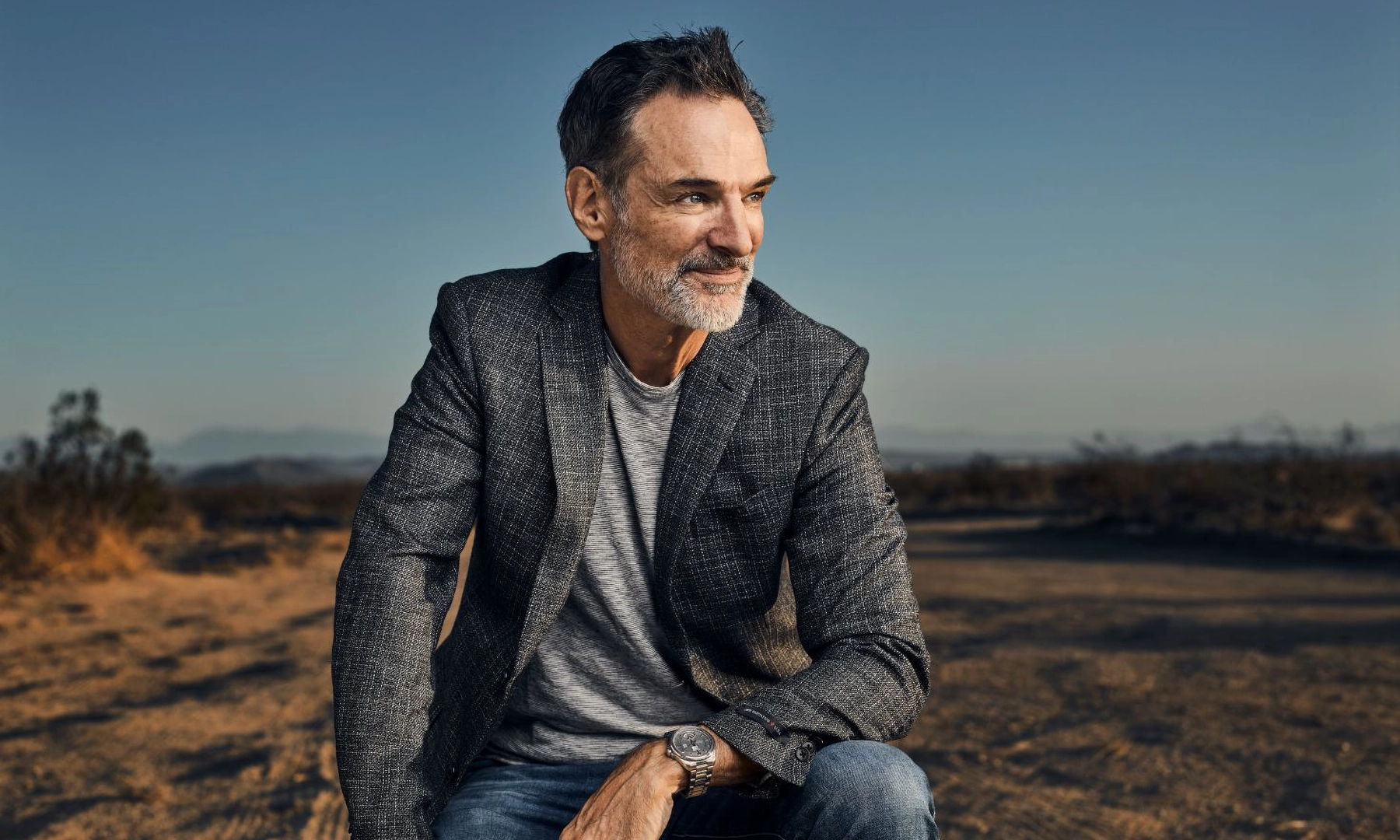
"The true space age is within reach. Access to space is more reliable and affordable than ever, and it’s opening up a new paradigm with a range of space-based businesses and ventures possible. And that’s what we’re here for: to make those possibilities real.” Tom Mueller, Founder and CEO, Impulse Space
The global space economy is estimated at over $600 billion. Some optimistic, but reputable, sources project that the space economy will nearly double – even triple – every five years for the forecastable future. The backbone of this space economy is thousands of satellites in orbit, which historically have had relatively “static” mission profiles: reaching and then maintaining a set orbital trajectory. But today’s space missions are requiring increasingly dynamic operations, making mobility within space a key challenge to solve.
The problem, obvious as it may seem, is that space is huge. The volume between where space begins above Earth and geostationary orbit (where many communications satellites reside) is over 75 trillion cubic miles. As a result, reaching specific locations quickly requires a dedicated rocket launch; alternatively, satellites can spend many months changing their orbits with onboard electric propulsion systems. Mission operators are faced with obstacles of high costs or long wait times (or both!) to get where they want to go. This situation creates challenges across the space sector, from commercial to civil to defense applications. How can we expand our opportunities in space if we’re limited in our maneuverability?
Tom Mueller founded Impulse Space to deliver the mobility infrastructure required for a true space age, anchored by powerful chemical propulsion systems that offer much greater delta-v for satellites than traditional designs.
“I think what’s really going to make the space economy take off is when you start building megastructures, like data centers, in orbit,” said Mueller. “It’s something that’s been talked about in science fiction for decades, but it will happen in this decade. The physics of this process is pretty clear: It’s a lot easier to put materials in space and build mega structures there than try to launch them from the ground.”
Taking full advantage of the opportunities that exist from low Earth orbit (LEO) to Mars requires bold vision and a lot of innovative engineering. It won’t be easy. It’s rocket science in its extreme form. But there is a way forward for individuals and firms that have the deep knowledge and experience of turning space science fiction into space reality – and space engineering into space business.
Q: Tell me about your upbringing. I’ve always wondered how a rocket scientist starts on the path to becoming a rocket scientist.
Well, I grew up in a tiny logging community in Northern Idaho, St. Maries, near Coeur d’Alene. My dad had a number of logging trucks and motorcycles. I helped him maintain and improve his logging trucks and ATVs. A very hands-on education, you might say. But I was also super interested in science and space. I loved Star Trek. It was my favorite TV show. I also read a lot of science fiction and, eventually, science.
So, I came from a real working-class family that prioritized practical experience over advanced education. But I would dream about space and just think about how big space is and how awesome it would be to go explore it. I knew that the only way to turn space dreams into my reality was through education. That took me to the University of Idaho and then on to a master’s degree in mechanical engineering at Loyola Marymount University in Los Angeles.
Q: How did you balance hands-on experimentation and formal training in your education?
Well, I think being mechanically inclined and having an outlet for that led me to want to become a mechanical engineer. That got me into school. But I went to school very interested in space, specifically rocket engines. That led me to hardcore engineering classes, like fluid dynamics, and thermodynamics, and heat transfer. My north star, so to speak, was to understand how to design and build liquid propellant rocket engines. I locked in on that path and it became my career goal.
Q: After school, in 1987, you went to TRW. At what point did you realize the traditional aerospace industry wasn’t the right place for you to realize your career goals?
Working for a big defense contractor has its benefits. But it also has a number of drawbacks – especially for a dreamer and tinkerer like me.
First, you don't usually get to spec what you're going to work on. If you have great ideas, but it's not what the government wants or what the customer wants, you don’t get to do it. The process leads to “design by committee,” which almost always leads to a sub-optimal spec. I’m very grateful for my time at TRW. We developed some really cool thrusters and engines while I was there. It was fun and I learned a lot; I had some awesome mentors. I mean, I stayed for 15 years for a reason. But too much of the time I felt like I was building something that satisfied a process rather than ideally solving a problem.
Second, you didn't really get to own something by yourself. Again, we produced some really important stuff at TRW, but the machinations of running the political gauntlets of defense contracting were full-solution crushing, and, at least for me, spirit crushing.
Q: Sounds like the perfect setup to become employee #1 at SpaceX.
Yeah, it was pretty refreshing when I went to SpaceX. In the first few meetings with Elon Musk and the group, we basically sketched out Falcon 1. We sized the vehicle. We picked the propellants, and we had our own spec that we were working on to make everything fit together. It was just very exciting.
That was May 2002. Elon made me head of propulsion. There’s a bit of serendipity in my getting the SpaceX job. In my spare time while working at TRW, I was very active in an amateur rocket club in Southern California. Elon had dreams of going to space, but when he went to Russia to buy a rocket, they refused him, so he decided to start a launch-vehicle company himself. He knew people at the rocket club and asked if anybody knew an engine guy. And they said, “You need to talk to Tom Mueller. He’s building this big amateur rocket.” I’d already built and flown several liquid rockets, so I was pretty well known in the club. Elon came down to see the guy doing these big, amateur, liquid-propellant rockets, and we hit it off. That started it.
Q: That still seems like a pretty big leap. How did you know to take the SpaceX risk?
Elon and I agreed that not only were lower-cost engines possible, but they were also necessary to open up space and space-based businesses. I met with several space startups that tried to hire me, but I didn’t think their talk was backed by their technology. Also, there was this little problem with capitalization. I could bootstrap amateur stuff, but I knew that scaling a commercial space venture was going to take a serious commitment of capital. So, Elon and I had a mind meld about what to do and how to do it; and Elon, fresh off the PayPal IPO, had the capital. Finally, I had a really strong sense that Elon wanted to build a working culture at SpaceX that fostered hiring the best and keeping the team focused on creating the highest-level space technologies and solutions. It was refreshing to see a startup that had the technology and vision, the capital, and the commitment to listen to the best and brightest to ensure that the ideal solutions emerged. I knew I needed to do this. And I stayed for 19 years.
Q: You developed multiple generations of the wildly successful Falcon engine, Merlin. What made you finally feel like it was the right time to leave SpaceX and do something new?
Honestly, I kind of worked my way out of a job. I sized what became Starship, the launch vehicle we were designing to get 100 tons to Mars, but then Elon, ever focused on reusability, asked me what it would take to get it back? That meant figuring out how to make power and propellant on Mars. Pretty non-trivial stuff. I had to divert my attention from working on our new Raptor engines to concentrate on that problem. I went back to Elon to tell him I was ready to hire the people to engineer and build the stuff we needed, but by then Starlink had taken center stage and I decided that it was time for something new, something different.
Q: Was the idea for Impulse Space already brewing in your mind?
Oh, yeah. I mean, I was spending my days thinking about how to get 100 tons into space, so I naturally started wondering how anybody could do anything with those 100 tons of cargo without dramatic innovations for moving all that stuff around. I knew we needed a venture dedicated to space mobility. That was the genesis of Impulse Space. I didn’t want to reinvent launch; SpaceX solved that brilliantly. I wanted to pick up where launch vehicles leave off.
Q: That sounds like the basis for a great business plan. Is that what you originally pitched investors?
That was exactly what was in our first pitch deck. We told the story that launch is solved and now we need to solve space mobility. Transporter flights started flying frequently and we pitched the need for a commercial orbital transfer vehicle. Moreover, the government started talking about sustained maneuvering in space, basically describing the need for a propulsive space-based craft. That further strengthened our pitch, since they conceptually were describing our Mira, the highly maneuverable spacecraft that we had designed. Going back to my concerns about my interactions with space-based startups before SpaceX, we had the technology to back up our talk.
Q: What is the opportunity for Impulse Space?
Anything that involves mobility and logistics in space: moving through open space and landing on space objects. That includes anything that has to do with missions to other bodies or planets. We're really excited about the NASA opportunities to do lunar landers and lunar transport back and forth. We want to make space activities exponentially more accessible by making them more certain, safer, and lower cost. Within that, our focus is to provide mobility to anything moving around in LEO, in higher energy orbits, and to the surface of objects in our solar system.
Q: You mention NASA, but what about commercial space business opportunities? When will we start seeing greater variety and maturity of those activities?
Our services are based on the capabilities of two distinct vehicles. Mira is our precision maneuvering vehicle. While Mira has flown a number of commercial payloads in the past, currently the demand is mainly from government customers.
Our Helios vehicle basically is an upper stage for a medium launch vehicle like Falcon 9. We’re selling dedicated, shared, and Caravan rideshare missions for that right now, and most of them are for commercial customers. It's been going really well; our team is signing a lot of customers and missions. We imagine the government use will increase over time, but for now, that's almost completely commercial. But to answer the question directly, most of the assets that we've flown so far have been commercial.
Q: Impulse Space’s opportunity – and your pedigree – is attracting incredible talent to your company. What other special sauce is differentiating Impulse Space?
Two things really differentiate us. First, we are very vertically integrated. Second, we’ve been innovative with our choices of propellants.
Our decision to be vertically integrated gives us much tighter control over cost, schedule, and service quality. That’s what lets us turn science fiction into science service. Not everybody can get that way because it takes a lot of talent and capital (shout out to DFJ Growth as one of our investors). Being vertically integrated is a huge advantage.
Another differentiator is our innovations around lower-cost propellants. Traditional storable propellants are hypergolic propellants, which ignite spontaneously when the different components come in contact with each other. Hypergols, like hydrazine and nitrogen tetroxide, are very toxic, very corrosive. They are outrageously expensive to safely store, handle, and test.
I am very familiar with hypergols. Most of my career, at TRW and SpaceX, I was working with those things. I knew Impulse Space was going to require a safer, less corrosive, and less expensive alternative. We came up with nitrous oxide as the oxidizer and ethane as the fuel for our Mira spacecraft. We use them with 3D printed, very mass-efficient and combustion-efficient rocket engines that light every time. It gives a huge cost and reliability advantage over our competitors.
And we’ve got the successes to prove it. In 2024, our Mira spacecraft nailed a 150-kilometer orbital raise with a 75-second burn. We think it was the biggest ever orbital maneuver at the time by a nitrous-based propulsion system. Then in 2025, our second Mira vehicle in orbit rendezvoused with the first one, as part of a joint mission with Starfish Space. This RPO mission further demonstrated Mira's precise maneuvering capabilities.
Q: You’re in the rocket science business. How does your leadership style instill confidence, collaboration, and execution in what arguably is the riskiest and most-dependent-on-innovation business there is?
I’ve had some great mentors, at TRW and elsewhere, who encouraged my development and I learned a lot from. But I’ll tell you, I think Elon is the best mentor anybody could ever have. I learned so much from him about startup culture, about how to run bold, fast, and hard, and just make things happen. Of course, we had a lot of talent at SpaceX, too. All of us learned from each other, and it was a collaborative environment. We took pride in it.
I’m instilling that learning culture, that emphasis on collaboration, and that pride in achievements at Impulse Space. A few of my colleagues from SpaceX are at Impulse, which really helped me build our culture into a foundation for execution. It’s nice to be leading an exciting company with an essential mission. We’re attracting great talent.
Q: Normally, at this point, I ask about a company’s future, but Impulse Space literally is creating and building the future. What can you share with us about what you see emerging?
A central commercial driver will be building megastructures in space. We can’t just launch these things into orbit. We have to launch components and assemble them in space like we did with the International Space Station (ISS). But the ISS took about 40 launches over 13 years to complete. Moreover, the ISS is small in comparison to the space-based data centers, for example, that are on the drawing board. To make these megastructures operationally and commercially viable, we really have to compress costs and schedules dramatically. And that requires exactly the kind of lower cost, higher precision, and schedule certitude that Impulse Space provides.
The future also includes utilizing the resources of the moon or asteroids, both as a staging area and as a source of raw materials. As a staging area – say, for a Mars excursion – starting a mission outside of the hard pull of the Earth’s gravity well opens a range of options that don’t exist if you’re starting from the surface of our planet.
Q: Wow.
This is happening. For real. Impulse Space is excited and proud to be shepherding it all into existence.