August 2026
The conflicts in Ukraine and the Middle East have exposed a stark imbalance on the modern battlefield. Cheap unmanned aerial drones have emerged as disruptive and effective offensive weapons. They wreak havoc because they are easy to deploy and expensive to stop, overwhelming traditional air defenses. Cambridge Aerospace was formed to address this problem head on. Led by founder and CEO Steven Barrett, Cambridge Aerospace is building low-cost autonomous interceptors that give Europe and its allies a more scalable and affordable way to defend against modern aerial threats.
The urgency and scale of the problem are hard to overstate. Drones costing mere tens of thousands of dollars are being launched in large numbers against military bases, critical infrastructure, and civilian populations, forcing defenders to respond with expensive interceptors that cost up to 100 times more than the attack drones they are targeting. These interceptors were developed in a different era for different threats, with relatively low production volumes. During seven weeks of conflict with Iran, the US reportedly used nearly half of its Patriot interceptor stockpile while defending against sustained drone and missile barrages sent to attack US systems and soldiers. Rebuilding this inventory will take years and require outsized spending for a suboptimal solution. This is where Cambridge Aerospace fits in.
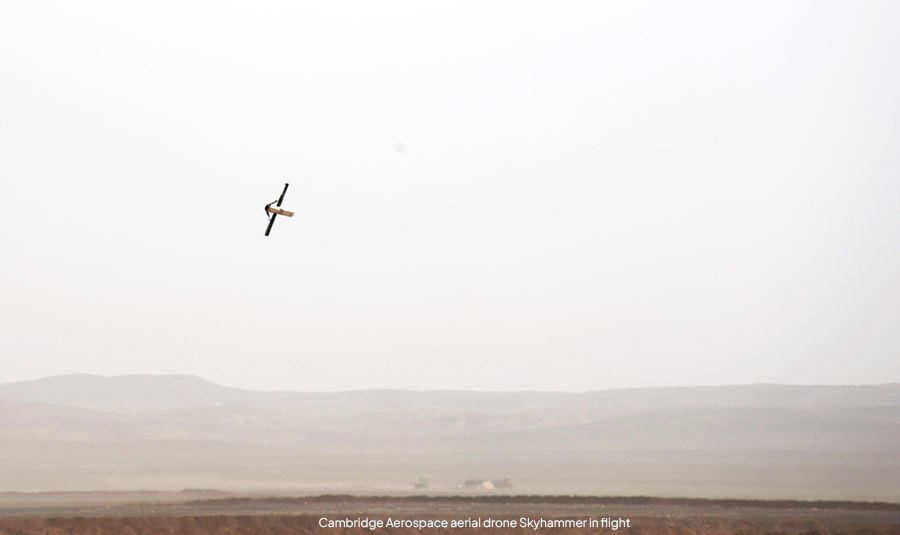
A cheaper interceptor only matters if it works. Many of the newer counter-drone systems rely on electric propulsion and optical sensing, which can limit speed, range, and effectiveness. Cambridge Aerospace is taking a different approach with its first product, Skyhammer, which pairs a small jet engine with an onboard proprietary radar system.
The engine provides the speed and range to chase both fast and slow threats, while the radar lets Skyhammer find and eliminate targets directly without the need for a complex web of ground-based companion systems. Skyhammer is designed to work rain or shine, day or night, with high accuracy and autonomous operation.
The future of air defense will be won as much on the factory floor as in the sky. Affordability and production at scale have been design requirements for Skyhammer from the outset. Cambridge Aerospace has vertically integrated the development, manufacturing, assembly, and testing of key components including its radars, guidance software, missile body, solid rocket motors, and launchers. This helps the company iterate faster, lower costs, and reduce its dependence on fragile supply chains. Cambridge Aerospace is carrying this same approach to the next product on its roadmap, Starhammer, an interceptor capable of detecting and destroying faster, higher value targets. Over time, the company plans to extend its technology and manufacturing platform across a broader range of air defense systems.
Cambridge Aerospace is executing with haste given the shortage of affordable and scalable drone defense solutions available for near-term field deployment. The company took Skyhammer from concept to flight testing in a matter of months, leading to a partnership with the UK Ministry of Defence to supply the Skyhammer system to British forces and Gulf partners this year. Skyhammer has since been tested in demanding desert conditions in Jordan and put through its paces by the US Army in Europe, validating its accuracy and effectiveness in the field.
Formed less than two years ago, the company’s rapid growth has been driven by the distinct backgrounds of the leadership team. Steven led MIT’s Department of Aeronautics and Astronautics before returning to his alma mater as Regius Professor of Engineering at the University of Cambridge. His technical depth is complemented by CCO Chris Sylvan’s experience of more than a decade serving in the Royal Marines, followed by work in emerging defense technology, and co-founder Junaid Hussain’s experience founding several emerging technology companies. This combination of expertise has allowed Cambridge Aerospace to hire and retain the best talent globally, with the company growing to 250 employees in the last 18 months.
For the past 20 years, we’ve been drawn to deeply technical teams solving hard problems with unique, tightly integrated hardware and software systems, using vertical integration to overcome the status quo and control their own destiny.
We’ve seen this strategy work across several of our portfolio companies, including Anduril, Hidden Level, Impulse Space, Saronic, SpaceX, and Tesla. Cambridge Aerospace brings the same ambition to air defense.
Europe urgently needs modern air defense capability and more of it built at home. Cambridge Aerospace offers both. We are honored to partner with Steven and his team as they work to make effective air defense affordable, reliable, and widely available.